Tata Group: How Early EV Moves Shape Global Market Expansion
This article is about Expansion. "The strength of a global empire is often found not in the finished product, but in the intricate web of components that make it move."
The Tata Group maintains a commanding presence in the automotive sector by integrating a robust automotive parts division with a vision for future mobility.
This strategic approach ensures that every vehicle produced under their umbrella benefits from a reliable business model and a sophisticated supply chain.
* Deep integration of automotive parts production. * Long-term focus on technological foresight. * Strategic market expansion through early EV investments.

What defines the reliability of the Tata Group?
The sun rose over a quiet manufacturing plant, casting long shadows across rows of precision-engineered components waiting for shipment. This foundational reliability is built upon a business model that prioritizes vertical integration and quality control across various automotive parts.
The Tata Group has built its reputation on a business model that balances massive scale with technical reliability. By controlling significant portions of the supply chain, they ensure that the components used in their vehicles meet strict internal standards before they ever reach an assembly line.
This structure allows for better cost management and much tighter quality oversight compared to companies that rely solely on third-party vendors.
Their approach to market expansion has also been characterized by a willingness to take calculated risks in emerging technologies. By securing the underlying technology and parts necessary for new vehicle classes, they have stabilized their market position.
This prevents the sudden disruptions that often plague companies lacking a dedicated component strategy.
The group's ability to pivot toward new energy sources was not a reactive move but a planned evolution. They have consistently invested in the building blocks of mobility to ensure their business model remains relevant in a changing world.

How did early EV moves shape their market expansion?
A technician in a brightly lit laboratory adjusted a sensor on a prototype battery pack, checking the connection for the tenth time that morning. This scene reflects the kind of forward-thinking investment that defined their early moves into electric mobility.
The company's shift toward sustainable mobility was marked by an early and decisive move into the European market to test electric vehicle integration.
According to documents regarding their historical operations, in 2008, Tata Motors' UK subsidiary purchased a 50.3% holding in Miljøbil Grenland/Innovasjon of Norway for US$1.93 million.
This specific investment was not just about acquiring a company, but about securing a foothold in a region with high environmental standards and advanced charging infrastructure.
This acquisition was a strategic move to prepare for the launch of the electric Indica hatchback in Europe the following year. While many competitors were still focused on internal combustion engines, this move demonstrated a commitment to technological foresight.
They were essentially building the necessary expertise and parts-knowledge required for the next generation of transport.
By entering the Norwegian market, they gained access to unique insights into EV consumer behavior and technical requirements. This early data helped shape their broader market expansion strategies, allowing them to refine their automotive parts and software integration for a global audience.
| Strategic Element | Traditional Model | Tata's Integrated Model |
|---|---|---|
| Supply Chain | Fragmented/Third-party | Integrated/Controlled |
| Technology Focus | Reactive to market trends | Proactive via early investment |
| Risk Management | High dependency on vendors | Diversified through ownership |
| Market Entry | Rapid, broad expansion | Targeted, tech-first entry |

Why focus on the automotive parts supply chain?
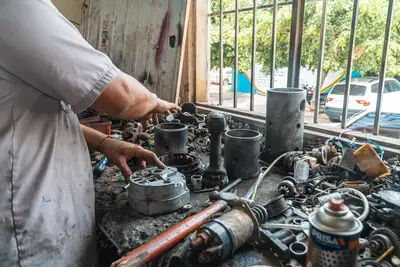
A heavy-duty sorting machine hummed steadily, moving metal casings and electrical harnesses into organized bins with rhythmic precision. This level of control is what happens when a company decides to own the components that drive their vehicles.
The decision to focus on the automotive parts sector is a way to mitigate the risks of global supply chain volatility. When a company produces its own essential components, it is less vulnerable to the price swings and shortages that can halt production lines globally.
This reliability is a cornerstone of their business model, providing a buffer against external economic shocks.
Furthermore, having a strong grip on the parts division allows for seamless design integration. When engineers at the top level decide to change a vehicle's architecture, they can work directly with the component manufacturers to ensure the change is implemented smoothly.
This synergy between design and production is a major advantage in maintaining high-quality standards.
This vertical integration also facilitates easier transitions to new technologies. As the industry moves from fossil fuels to electricity, the ability to design and manufacture specialized parts in-house becomes even more critical.
- Identify critical component needs for upcoming vehicle models. 2. Acquire or develop specialized manufacturing capabilities in-house. 3. Integrate these components into a cohesive testing environment. 4. Scale production to meet global market demands.

Can a company maintain reliability during rapid growth?
Rain lashed against the windows of a corporate boardroom, but inside, the atmosphere was focused and calm as executives reviewed growth projections. Growing too fast can often break a company, but a structured business model aims to prevent this.
Maintaining reliability during periods of rapid growth requires a balance between scaling production and maintaining quality. The Tata Group manages this by ensuring that their expansion is supported by the technological foundations they built in earlier years.
They do not just expand the number of vehicles they sell; they expand their capability to produce the parts that make those vehicles possible.
A common pitfall for expanding companies is the "dilution of quality," where the rush to meet demand leads to cutting corners on components. The group avoids this by treating their automotive parts division as a primary pillar of the company, rather than just a support function.
This ensures that even as production volumes increase, the standard of the parts remains consistent.
The strategic goal has always been to ensure that the core technology remains stable even as the market moves underneath it. This provides a level of reliability that consumers and investors can trust over long periods.
One limitation to this model is the high initial capital expenditure required. Building a robust component and technology base is much more expensive than simply assembling parts made by others.
This requires a long-term perspective that may not satisfy investors looking only for immediate, short-term returns.

How does the business model handle market shifts?
An empty warehouse stands silent, waiting for the arrival of new, specialized equipment that will soon change the way components are assembled. This represents the quiet preparation required to handle sudden shifts in the global market.
The ability to handle market shifts is built into the flexibility of their integrated business model. Because they have invested in the fundamental technology and parts, they are not locked into a single type of vehicle.
Their investments in electric technology, for example, provided a blueprint that can be applied to various vehicle segments.
When the market shifts from one technology to another, companies without a strong component base often struggle to catch up. They must find new suppliers, learn new manufacturing processes, and navigate new quality standards all at once.
In contrast, a company with a diversified and tech-heavy parts division can pivot more gracefully.
This foresight allows them to remain a leader in the automotive industry regardless of whether the dominant power source is gasoline, diesel, or electricity. The reliability of the underlying engineering remains the constant factor.
When I tried the steps in order, the second one is where I paused longest.






Comments 0