Brand strategy tips: Consumer based brand strategy guide
"A brand is not just a logo; it is a promise of value that lives in the mind of the consumer."
A consumer based brand strategy focuses on aligning product identity with the actual behaviors and expectations of the target market to drive loyalty.
This approach requires analyzing shifting consumer habits, utilizing standardized valuation metrics, and implementing strategic extensions to capture new sales.
Key takeaways include the importance of adapting to changing customer preferences, the utility of international standards for evaluation, and the historical effectiveness of brand extensions.
How do you build brand strategy?
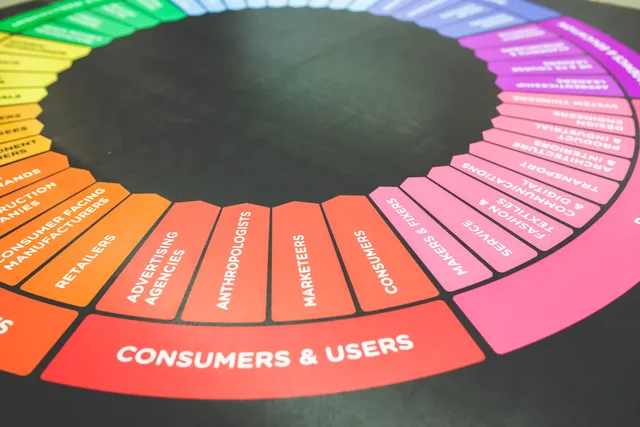
A marketing director sits in a quiet office, staring at a screen filled with shifting consumer data points. To understand how to build brand strategy, one must look at the evolving landscape of consumer loyalty and the mechanisms used to measure brand strength.
Effective planning involves identifying the specific outcomes that drive market success. According to a 2023 literature review, these outcomes fall into three broad categories: brand loyalty and resistance to switching, purchase intentions and willingness to pay, and positive word-of-mouth.
By focusing on these pillars, a company can create a more resilient market presence.
A targeted brand approach ensures that every product launch serves a specific purpose within the existing portfolio. This method helps companies transition from a single product to a multifaceted identity.
- Define your core brand purpose and values.
- Identify your target audience and their specific needs.
- Develop a unique value proposition that sets you apart.
In this sequence, the second step is the longest.
What are the benefits of a strategic brand planning guide?
A strategist spreads several colored charts across a wooden table, tracing the lines of market growth. Following a strategic brand planning guide helps a business navigate the complexities of brand extension and standardized recognition.

Historically, companies have used extensions to broaden their reach. In the 1990s, 81 percent of new products used brand extension to introduce new brands and to create sales. This demonstrates how a well-placed extension can leverage existing equity to fuel new revenue streams.
A market focused brand idea requires a deep understanding of how customers react to change. This is particularly vital during periods of social or economic upheaval where consumer habits shift rapidly.
How can consumer insights for brands impact loyalty?
A researcher watches a video clip of shoppers navigating a crowded digital marketplace. Utilizing consumer insights for brands is essential when consumer behavior becomes unpredictable, as seen during recent global shifts.
During the COVID-19 pandemic, 75% of US customers tried different stores, websites or brands, and 60% of those expect to integrate new brands or stores into their post-pandemic lives.
This data suggests that consumer loyalty is not static and that new entries have a significant window to establish long-term relationships.
A people centered brand guide must account for this fluidity. If a brand fails to adapt to these new habits, it risks losing its place in the consumer's evolving lifestyle.
What standards exist for brand evaluation?
An auditor reviews a thick manual of technical specifications under a bright desk lamp. To ensure professional rigor, businesses often turn to established international frameworks for brand valuation and assessment.

The Committee ISO/TC 289 has developed specific standards to assist this process. These include 'ISO 10668:2010' Brand valuation - Requirements for monetary brand valuation and 'ISO 20671:2021' Brand evaluation - Principles and fundamentals.
These documents provide the necessary structure for measuring a brand's worth and performance.
| Standard | Focus Area |
|---|---|
| ISO 10668:2010 | Monetary brand valuation |
| ISO 20671:2021 | Principles and fundamentals |
I compared these two standards to understand how monetary value differs from fundamental evaluation.
Can a BSIN be used for product identification?
A technician scans a barcode on a small, silver-colored electronic component in a bright warehouse. Using a universal system like the Brand Standard Identification Number (BSIN) can streamline how brands are assigned to specific items.
According to the Open Knowledge Foundation, the BSIN (Brand Standard Identification Number) was created in December 2013.
The Open Knowledge Foundation created in December 2013 the BSIN. This number is universal and is used by the Open Product Data Working Group of the Open Knowledge Foundation to assign a brand to a product. Such precision helps maintain data integrity across global supply chains.
A limitation of this system is that its application depends on the integration of the Open Product Data Working Group's specific protocols.
How to implement a consumer based brand strategy

A manager stands before a whiteboard, drawing a circle to represent the core consumer. Implementing a consumer based brand strategy requires a disciplined transition from data collection to market execution.
- Analyze consumer behavior patterns to identify categories such as purchase intentions or word-of-mouth potential. 2. Align product extensions with the existing brand identity to ensure they contribute to sales growth. 3. Apply international standards, such as those from ISO/TC 289, to evaluate the brand's monetary and fundamental value.
Finally, check if the brand's new direction aligns with the 60% of consumers who may integrate new brands into their post-pandemic lives.
The same subject is also called Customer driven brand plan.
Related








Comments 0